Epidemiology, Environment and Biostatistics

“We aim to generate knowledge that can improve disease prevention, treatment and public-health policies. Key public-health issues include cardiovascular disease, cancer, respiratory illness, diabetes and reproduction.”
- Cecilia Ramlau-Hansen
Head of section

What we do
Our aim is to understand and help prevent major public health challenges.
From a life-course perspective, we study how lifestyle, environmental and occupational exposures as well as genetic factors influence human health from conception through childhood, adulthood and ageing - and across generations.

Our approach
We develop biostatistical methods and apply advanced epidemiological and statistical techniques to design studies, analyse data and interpret complex health relationships.
We create and refine tools for assessing environmental and occupational exposures including sensors, biomarkers, job-exposure matrices and geographical models.
Our research units:

Epidemiology
Factors that influence health
We study how lifestyle, diet, genetics, vaccines, environment, climate, medications, social and psychological factors influence health.
Health conditions we study
Our focus research areas are diabetes, cancer, puberty, fertility, endometriosis, childhood obesity, neurodevelopment, mental health and more.
Data to address health challenges
We use modern epidemiological methods and large cohort data, biobanks and national registries to tackle key public-health challenges.

Environment
How environmental exposure influence health
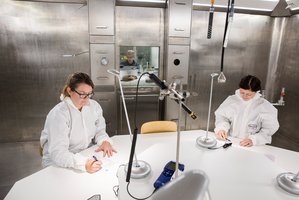
We investigate how air pollution, drinking water, chemical mixtures, microbial exposure and occupational exposures contribute to disease or good health.
We develop methods for exposure assessment
We use longitudinal cohorts, register data, genetics, biobanks and controlled human exposure studies.
Key health conditions
Our research covers airway disease, inflammatory conditions, allergy, cancer and reproductive health mostly in Denmark, the Arctic and Europe.


Biostatistics
Statistical methods for health data
We develop and apply statistical methods for analysing health data from clinical studies, laboratory research and national health registers.
Collaboration on methodological development
We collaborate widely across departments and institutions to ensure robust methodology and ongoing methodological development.


We work in close collaboration with national and international research centres and participate in numerous interdisciplinary projects.

Through teaching and supervision at the PhD and postgraduate levels, we contribute to training the next generation of researchers in epidemiology, biostatistics and environmental health.